

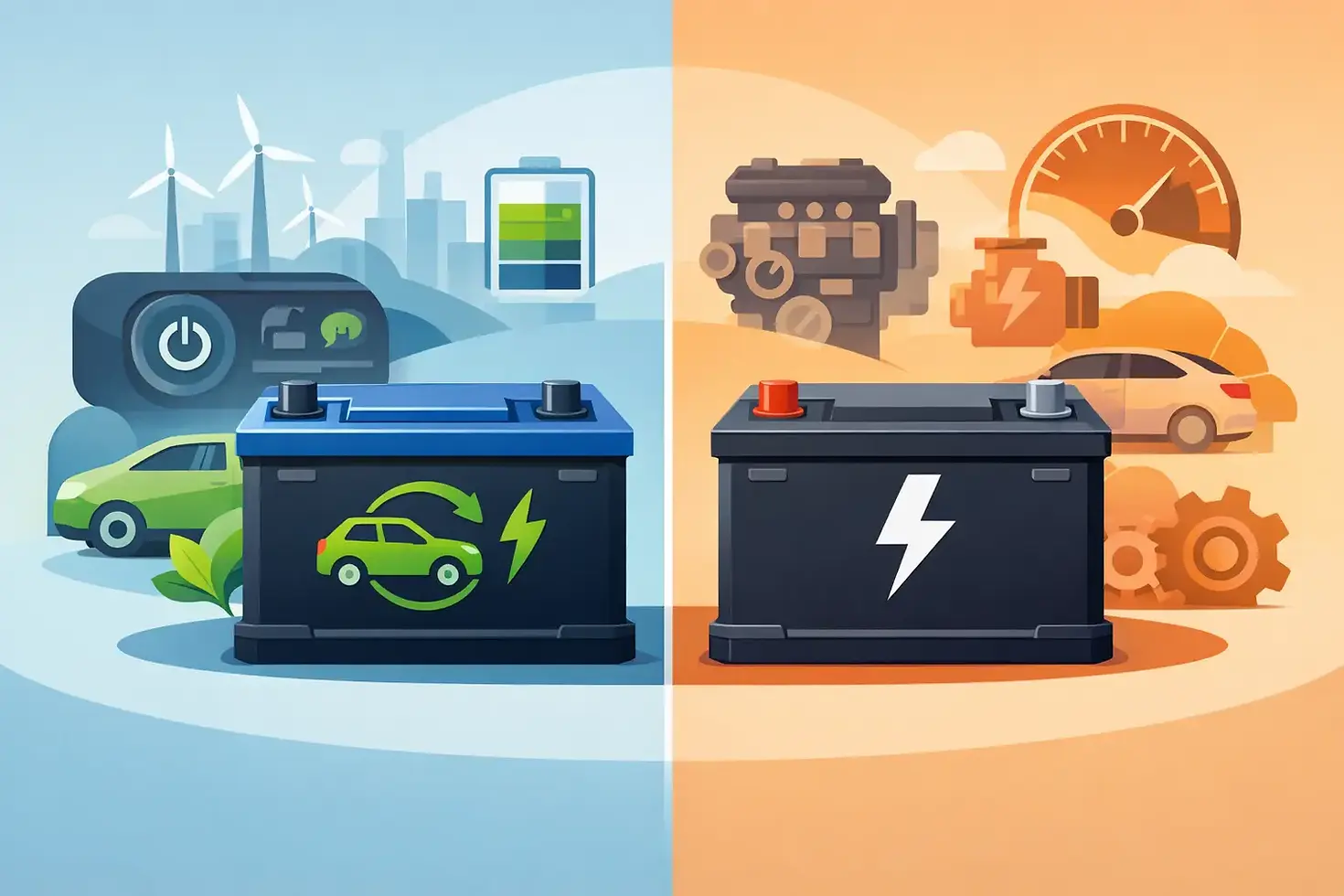
Stop Start Battery vs Regular: What Fits?
If your car won’t start after a school run, work shift or quick stop at the shops, the last thing you need is battery confusion. When people ask about stop start battery vs regular options, they usually want a straight answer - can you swap one for the other, and what actually happens if you get it wrong?
The short answer is no, not safely in many vehicles. A stop-start battery is built for a different job. It handles far more frequent starting, supports electronics while the engine cuts out at traffic lights, and works with a charging system designed around that technology. A regular battery is fine in vehicles that were built for a standard setup, but it is not a like-for-like replacement in a stop-start car.
Stop start battery vs regular: the basic difference
A regular car battery is designed to deliver a strong burst of power to start the engine, then recharge steadily while you drive. That setup suits older vehicles and cars without heavy electrical demand when the engine is off.
A stop-start battery does more than that. In a vehicle with stop-start technology, the engine may switch off and restart repeatedly during one trip. At the same time, the battery still needs to support systems like lights, air conditioning, infotainment, sensors and safety features. That means the battery has to cope with more cycling, faster recovery and a higher workload overall.
This is why stop-start vehicles typically use EFB or AGM battery types rather than a standard flooded battery. They are built to tolerate repeated discharge and recharge far better than a regular battery can.
Why modern cars need the right battery type
In practical terms, your battery is no longer just a box that starts the car. In many modern vehicles, it is part of a managed electrical system. The car monitors battery condition, charging rates and power demand. If the wrong battery is fitted, the problem may not show up immediately, but it often creates issues over time.
You might notice the stop-start function stops working first. Then there can be warning lights, poor charging performance, electrical faults or shortened battery life. In some vehicles, a battery change may also require registration or coding so the car knows a new battery has been installed and can charge it correctly.
That is where drivers get caught out. A cheaper regular battery may seem like a quick fix, but if the vehicle was designed for AGM or EFB, it can become an expensive shortcut.
What is a regular battery best for?
A regular battery suits vehicles with conventional charging systems and lower electrical demand. If your car does not have automatic engine stop-start and does not rely heavily on battery power while idling, a standard battery is often the correct and cost-effective choice.
For many older cars, some basic family vehicles and certain utes or work vehicles with simpler systems, a regular battery still makes perfect sense. The key is matching the battery to the vehicle, not just choosing the cheapest unit that fits the tray.
What is a stop-start battery best for?
A stop-start battery is best for vehicles fitted with factory stop-start technology. These batteries are designed for more start cycles, stronger charge acceptance and better support for onboard electronics.
There are two main types. EFB batteries are usually used in entry-level stop-start systems, while AGM batteries are used in more demanding setups with greater electrical load or regenerative braking. They are not interchangeable in every case. If a vehicle requires AGM, downgrading to EFB or standard can lead to reduced performance and early failure.
Can you replace a stop-start battery with a regular battery?
In most cases, you should not. Physically fitting one is not the same as fitting the right one.
A regular battery in a stop-start vehicle may struggle with repeated cycling and may not recharge properly under the car’s charging strategy. That can lead to flat battery call-outs, unreliable starting and system faults. It can also shorten the life of the battery dramatically, which means paying twice instead of solving the problem once.
There are some situations where drivers temporarily disable stop-start and assume a regular battery will be fine. That is risky thinking. Even if the stop-start function is turned off manually, the vehicle’s charging and electrical design may still expect a stop-start battery.
The safer approach is simple: fit what the vehicle manufacturer specifies, or an approved equivalent with the same standard and rating.
Signs you may have the wrong battery installed
Sometimes the wrong battery has already been fitted by the time a driver notices something is off. The car may still start, but not behave as it should.
Common signs include stop-start no longer activating, battery or engine warning lights, electrical systems acting strangely, slower cranking, or a new battery failing much sooner than expected. If your battery was replaced recently and problems started after that, it is worth checking whether the correct battery type was installed and whether the system was tested properly afterwards.
This matters even more in Adelaide conditions, where heat can put extra strain on battery performance. A battery that is already the wrong type for the vehicle has even less margin for error in hot weather.
Cost vs value: why regular is not always cheaper
A regular battery usually costs less upfront than an AGM or EFB battery. That part is true. But purchase price is only one part of the equation.
If a regular battery lasts well in a standard vehicle, it is good value. If the same battery is installed in a stop-start vehicle and fails early, causes charging issues or affects other systems, it is not cheaper at all. It is just a lower upfront spend followed by more inconvenience.
For drivers who rely on their car every day, downtime matters. Missing work, waiting for assistance, or dealing with repeated battery trouble costs time and stress as well as money. The right battery tends to be the better value option because it matches the vehicle’s actual demand.
Why battery testing matters before replacement
Not every starting problem means the battery is the only fault. A weak alternator, charging issue, parasitic drain or poor terminal connection can look like battery failure.
That is why proper testing matters before fitting a replacement. A good battery service should check battery condition, charging output and overall system health so the real problem is identified. Otherwise, you can end up replacing a battery when the fault sits elsewhere.
This is especially important with stop-start vehicles. Because the system is more sensitive, guessing is more likely to lead to the wrong fix.
How to choose the right battery for your car
The most reliable way is to match the battery to your vehicle’s specifications, including type, capacity, cold cranking performance and physical size. If the car came with AGM, replace it with AGM unless a verified manufacturer-approved alternative says otherwise. If it uses EFB, fit the correct EFB specification. If it is a standard non-stop-start vehicle, a regular battery may be exactly what you need.
It also helps to think about how you use the car. Short trips, heavy accessory use and long idle periods all place more strain on the battery. A commuter vehicle doing school drop-offs and local errands often works the battery harder than many drivers realise.
When in doubt, don’t guess from the battery label alone. Different vehicles that look similar can require different battery technologies.
The right answer depends on the car, not just the price
The stop start battery vs regular debate really comes down to one thing: the battery has to suit the vehicle’s electrical system. There is no universal upgrade, and there is no safe shortcut in a modern stop-start car. A standard battery still has its place, but only where the vehicle was designed for it.
If your car is showing signs of battery trouble, the fastest way to avoid the wrong replacement is to have the battery and charging system checked properly on site. That is the practical approach we take at 5Stars Batteries across Adelaide - identify the issue, fit the correct battery, and get you moving again without the workshop runaround.
A battery should solve a problem, not create a second one. Getting the right type from the start saves a lot of hassle later.


Comments