

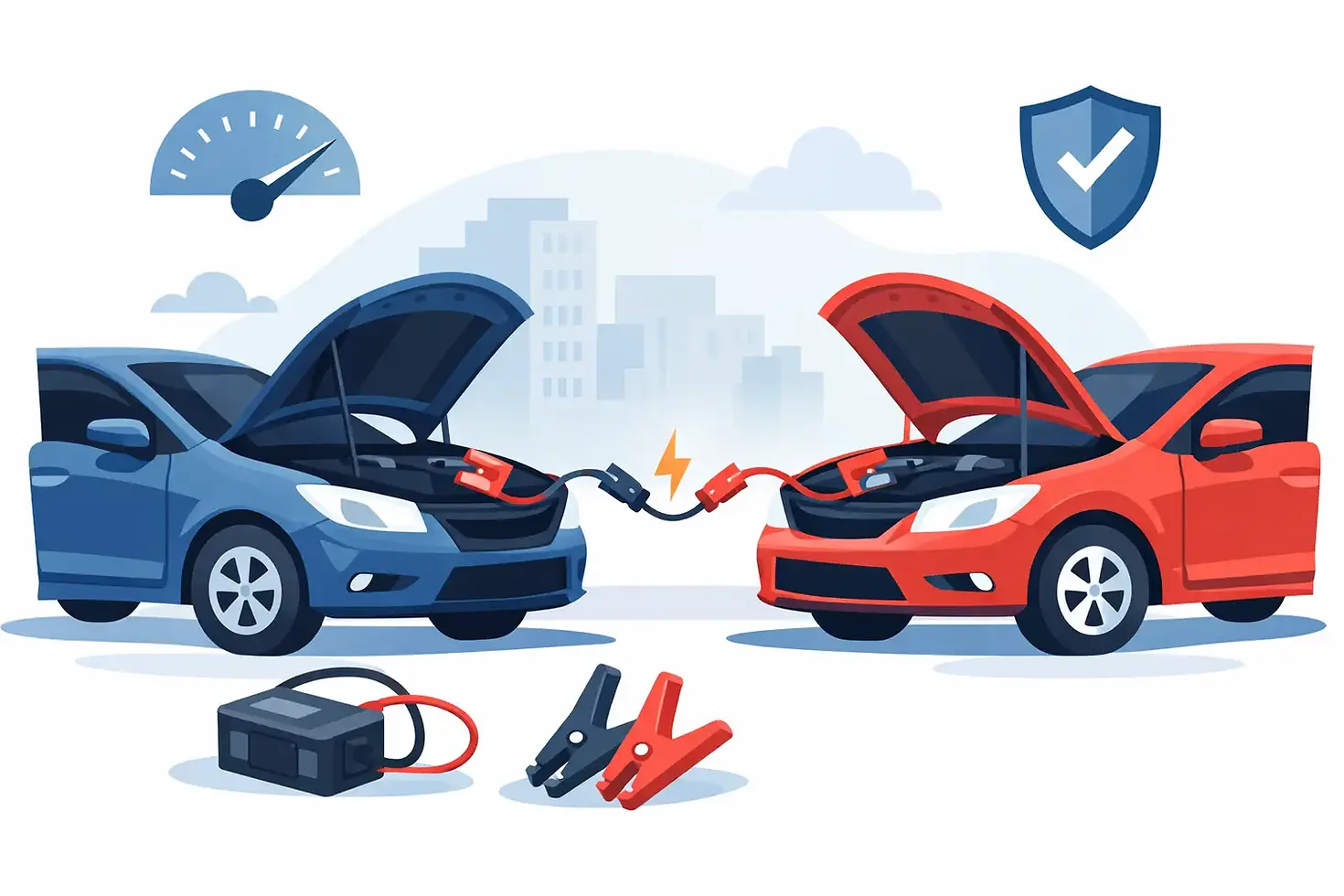
How to Jump Start Car Safely and Fast
A flat battery always seems to happen when you are already running late - outside work, in the school pick-up line, or stuck in the driveway with a full day ahead. If you are trying to work out how to jump start car safely, the good news is that it is often straightforward if you use the right setup, follow the correct order, and know when to stop and get help.
When a jump start is the right fix
A jump start is designed to get enough power into a flat battery so the engine can crank and start. It is a good option when the battery has gone flat because the lights were left on, the car has not been driven for a while, or the battery has temporarily lost charge.
It will not fix every no-start problem. If the battery is badly worn out, the alternator is not charging, the starter motor has failed, or there is an electrical fault, jump starting may not get you going for long. In some cases, the car may start and then go flat again shortly after.
That is why the first step is not connecting cables. It is taking a quick look at what the vehicle is doing.
Before you jump start a car, check these signs
Turn the key or press the start button and pay attention. If the engine cranks slowly, the dash lights are dim, or you hear rapid clicking, a flat battery is a likely cause. If there is no response at all, or warning lights are flashing strangely, the issue could still be battery-related, but it could also be something more involved.
If you notice a swollen battery case, leaking fluid, a strong rotten egg smell, damaged terminals, or obvious corrosion, do not attempt a jump start. Batteries can release explosive gas, and a damaged unit is not something to take chances with.
You should also be cautious with modern vehicles, especially stop-start models. Many newer cars have specific jump-start points and battery management systems. Connecting to the wrong place can create problems you do not need. If you are unsure, check the owner’s manual before touching anything under the bonnet.
What you need to jump start a car
You need a set of quality jumper leads and a second vehicle with a healthy battery, or a properly rated jump starter pack. Both options can work well. A booster pack is often simpler and safer for everyday drivers because you do not need to position another vehicle close by.
If you are using another car, make sure both vehicles are turned off before connecting anything. Put both in park or neutral, apply the handbrake, and keep keys away from moving engine parts. Do not let the vehicles touch each other.
Take a moment to identify the battery terminals. Positive is usually marked with a plus sign and often has a red cover. Negative is marked with a minus sign and is usually black.
How to jump start car with jumper leads
The order matters. Get it right, and the process is usually quick. Get it wrong, and you can damage the electrical system or create sparks where you do not want them.
Step 1: Connect the positive lead first
Attach one red clamp to the positive terminal on the flat battery. Then attach the other red clamp to the positive terminal on the donor battery.
Make sure the clamps are secure and not sitting loosely on plastic covers or corroded metal.
Step 2: Connect the negative lead carefully
Attach one black clamp to the negative terminal on the donor battery. The final black clamp should go to an unpainted metal earth point on the car with the flat battery, not directly onto the negative battery terminal unless the manufacturer specifically allows it.
A solid metal bracket or engine earth point is usually the best choice. This helps reduce the risk of sparks near the battery.
Step 3: Start the donor vehicle
Start the car with the healthy battery and let it run for a few minutes. This gives the flat battery a small charge before you try to crank the dead vehicle.
Do not race the engine hard. A steady idle is usually enough.
Step 4: Start the flat vehicle
Try to start the car with the flat battery. If it starts, let it idle. If it does not start on the first try, wait another minute or two and try again.
If the car still will not start after a couple of attempts, stop there. Repeated cranking can overheat components and flatten the donor battery as well.
Step 5: Remove the leads in reverse order
Once the car is running, remove the black clamp from the earth point on the previously flat vehicle, then the black clamp from the donor battery. After that, remove the red clamp from the donor battery and finally the red clamp from the restarted vehicle.
Keep the clamps from touching each other or any moving parts.
How to jump start a car with a booster pack
A jump starter pack can be more convenient, especially if you are at home, in a car park, or stuck somewhere without another vehicle around.
The basic process is similar. With the booster pack switched off, connect the red clamp to the positive terminal and the black clamp to the approved negative or earth point. Turn the booster pack on only when everything is connected properly. Then start the vehicle.
Once the car starts, switch the pack off and remove the leads in the correct order according to the manufacturer’s instructions. Different packs vary slightly, so it is worth reading the label before you need it in a hurry.
What to do after the car starts
Getting the engine running is only half the job. If you switch it off too soon, you may be right back where you started.
Let the vehicle run for at least 15 to 20 minutes, or better still, take it for a proper drive. A short idle in the driveway may not put enough charge back into the battery, especially on newer vehicles with higher electrical demand.
If the battery is old, the weather has been extreme, or the car has needed more than one jump start recently, there is a fair chance the battery is near the end of its life. In that case, a jump start is only a temporary fix.
When not to keep trying
There is a point where continuing is not helpful. If the battery is completely dead, the terminals are heavily corroded, the engine just clicks without cranking, or the car starts and immediately stalls again, there may be a charging problem or a failed battery.
This is also where modern stop-start vehicles can catch people out. These systems often use AGM or EFB batteries and need the right replacement type and proper testing. A general guess can waste time and money.
If you are on a roadside, in a tight car park, or somewhere unsafe, it is also better not to push on with a DIY attempt. Safety comes first. Moving traffic, poor lighting, rain, and cramped spaces all change the risk.
Common jump-start mistakes that cause trouble
The biggest mistake is reversing the polarity. Connecting positive to negative can cause major electrical damage in seconds. It is also common to clamp onto the wrong points because the battery is hidden under covers or located away from the engine bay.
Another issue is using cheap or undersized jumper leads. Thin leads may not carry enough current to crank the vehicle properly, which leads people to think the battery is completely dead when the real problem is the equipment.
The last mistake is assuming a successful jump start means the problem is solved. If the battery is failing internally or the alternator is not charging, the vehicle may leave you stranded again later that day.
When calling for help is the smarter option
There is no prize for wrestling with a battery issue in a work shirt on the side of the road. If you are not confident, the vehicle is difficult to access, or you suspect more than a simple flat battery, getting professional help is usually the faster option.
A mobile battery specialist can do more than just get the car started. They can test the battery, check the charging system, confirm whether the alternator is doing its job, and replace the battery on the spot if needed. For Adelaide drivers, that often means less downtime and no need to organise a tow or lose half the day sitting in a workshop.
That practical, on-site approach is exactly why many motorists call 5Stars Batteries when a jump start is not enough or they simply want the problem sorted properly the first time.
If your car has gone flat once, a jump start might get you moving. If it has happened twice, or the battery is showing its age, it is worth treating it as a warning rather than a one-off inconvenience.


Comments